

HR for the Greater Good Conclave 2.0 at XLRI Is Underway: Plan To Attend Next Year
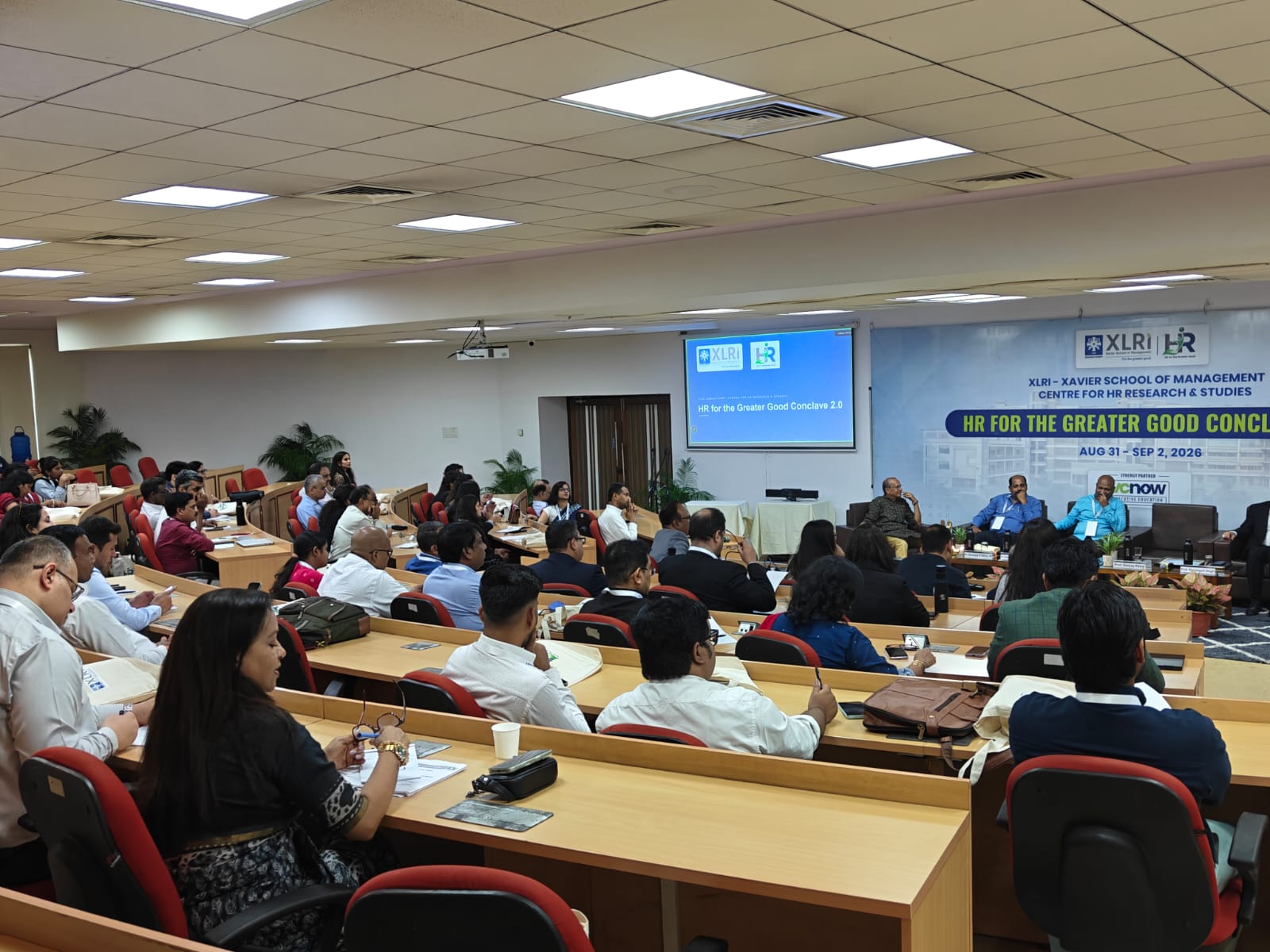
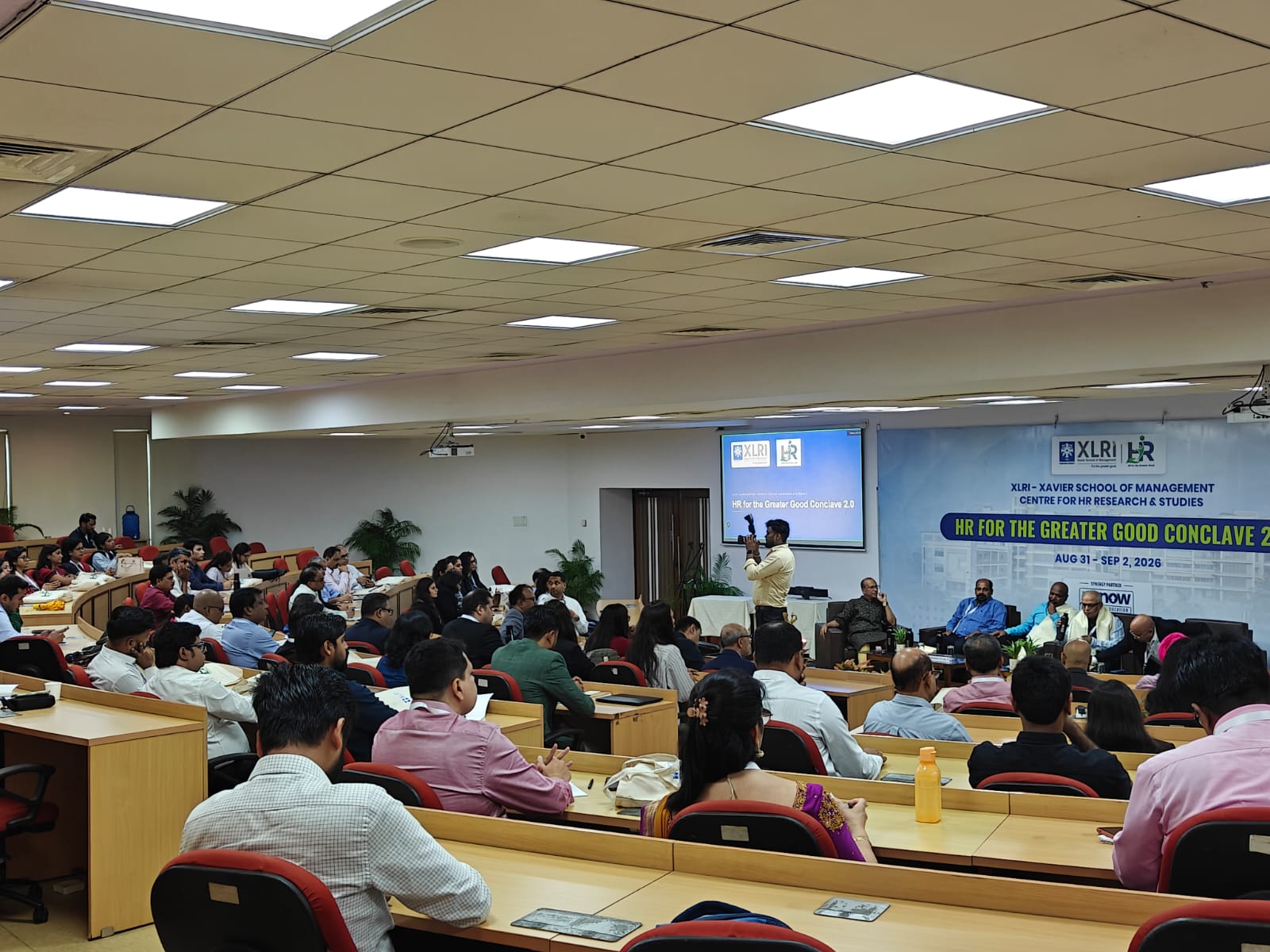
XLRI’s HR for the Greater Good Conclave 2.0 is underway, bringing current HR conversations on AI, labour reform, sustainability and workforce change to Jamshedpur. Organisations interested in the programme can start preparing to attend the next edition.
Direct answer: the 2026 conclave is underway at XLRI Jamshedpur from August 31 to September 2, with discussion spanning AI adoption in HR, labour reforms, Green HRM, total rewards and digital transformation. If your organisation would like to participate, use this year’s themes and format to prepare for the next edition, subject to XLRI’s official announcement. Official programme page.
Executive Summary
HR for the Greater Good Conclave 2.0 is an official XLRI Centre for HR Research and Studies programme built for organisations that want practical discussion, peer examples and recognition around responsible people strategy. The 2026 edition is underway from August 31 to September 2. Organisations considering next year’s edition can use the official themes, participation format and evaluation model to prepare early.
The timing is sharp. The World Economic Forum’s Future of Jobs Report 2025 says 86% of employers expect AI and information-processing technologies to transform business by 2030, while 39% of workers’ current skill sets are expected to change over the same period. The ILO’s 2025 GenAI update adds that one in four workers globally is in an occupation with some degree of GenAI exposure, with transformation more likely than outright redundancy.
For Indian employers, the labour-policy context matters too. The Government of India has made the four Labour Codes effective from November 21, 2025, rationalising 29 earlier central labour laws according to the Press Information Bureau. That makes a practical forum on HR governance, employee voice and responsible execution especially relevant in 2026.
Share of existing worker skill sets expected to change by 2030 in the WEF 2025 report.
Table Of Contents
What The Conclave Is
The official XLRI page describes HR for the Greater Good Conclave 2.0 as a national platform that brings together industry leaders, policymakers, academicians and practitioners to reimagine HR as a driver of ethical, inclusive and sustainable impact. It is organised by the Centre for HR Research and Studies at XLRI Jamshedpur and is explicitly framed around the triple bottom line of people, planet and profit. Those details matter because they signal that the event is not positioned as a narrow recruiting or talent-acquisition conference. It is positioned as a governance and strategy forum. Official programme details.
The programme structure is also unusually practical. The official schedule lays out three days: thought leadership and context setting on August 31, presentations and panel discussions on September 1, and final-round presentations with a valedictory session on September 2. Organisations are invited to present a 15-minute PowerPoint on one sub-theme, and the official evaluation model combines a pre-conclave survey, the actual policy, perception of the policy, presentation quality, and panel or peer review. That combination rewards implementation quality, not just polished slides.
The target search intent behind this event is clear: working professionals want to know what the conclave is, whether it is worth their time, and how it translates into outcomes. On those points, the site gives enough to say yes, this is a serious programme for leaders who want policy-grounded, cross-sector HR conversations instead of broad motivational messaging.
Why The Theme Lands In 2026
The theme works because the pressure on HR is now structural, not seasonal. The World Economic Forum reports that AI and information processing are expected to transform business for 86% of employers by 2030, and that 63% of employers see skill gaps as a major barrier over the 2025-2030 period. That makes HR the function that must translate technology bets into hiring, reskilling, role design, governance and workforce trust.
The ILO’s May 20, 2025 research brief sharpens the point. It finds that one in four workers worldwide is in an occupation with some degree of GenAI exposure, but most jobs are more likely to be transformed than eliminated. For HR leaders, that creates a real pain point: the challenge is not only job loss. It is redesigning work, updating skills, protecting dignity and setting fair decision rules before trust breaks down.
India’s labour-policy backdrop makes the conclave more relevant, not less. Government sources state that the four Labour Codes came into effect on November 21, 2025, rationalising 29 earlier central labour laws and expanding the discussion around wages, safety, social security, formalisation and worker welfare. HR teams now have to move from theory to operating practice in a more integrated labour framework. PIB overview and worker-provisions summary.
A reasonable objection is that many conferences claim to address change. What sets this one apart is that its official themes line up with live regulatory, technological and capability shifts, and the design asks organisations to present actual initiatives and measurable impact rather than only attend keynotes.
The Five Themes Match Real HR Pressure
The official page lists five thematic tracks: Artificial Intelligence Adoption in HR, Impact of Labour Reforms on Labour Practices, Environment and Sustainability through Green HRM, Total Rewards and Career Management, and Digital Transformation of Business and HR or IR processes. That mix mirrors the most common professional questions around 2026 HR strategy: how to adopt AI without bias, how to operate under labour reform, how to turn ESG into workforce behaviour, how to keep rewards credible, and how to digitise without damaging employee experience. Official theme list.
This breadth also solves a content gap that many HR readers feel. Most event pages talk either about technology or compliance or culture. Few link all three. XLRI’s framing does, which makes the content more usable for CHROs, IR leaders, L&D heads, business HR partners and public-sector HR decision-makers who need a shared language across functions.
If your team is deciding whether the programme is relevant, the simplest filter is this: attend if you are actively changing how you recruit, evaluate, pay, schedule, reskill, formalise or digitise work. Skip it only if your people agenda is stable, low-change and untouched by AI, regulation, sustainability or workforce redesign, which is rare in 2026.
AI In HR Needs Governance, Not Hype
The AI track is timely because it sits between promise and risk. The ILO working paper on AI in human resource management warns that unclear objectives, biased data and opaque programming can undermine recruitment, pay, scheduling and performance systems. That is exactly the kind of objection serious HR teams are now raising internally: not whether AI exists, but whether it is fair, transparent and fit for people decisions.
The official conclave theme description acknowledges the same tension by framing AI around efficiency, fairness, transparency and dignity. That alignment between academic critique and official programme design is a good sign. It suggests the programme is grounded in the real governance problem rather than generic innovation language.
For readers searching for a natural keyphrase, “HR for the Greater Good Conclave 2.0” fits best, but the deeper relevance comes from adjacent entities and questions: AI in HR governance, responsible people analytics, labour code implementation, Green HRM, total rewards and digital employee experience.
Labour Reform And Sustainability Are Now Operating Issues
The labour-reform track should not be read as a legal footnote. With the four Labour Codes effective from November 21, 2025, HR teams need to translate policy into appointment letters, wage discipline, social-security coverage, contractor management, health and safety processes, and worker communication. Government material explicitly presents the codes as a move toward better wages, safety, social security and stronger welfare. PIB labour-codes release.
The sustainability track is equally practical. For listed companies, SEBI’s BRSR Core framework extends sustainability disclosure and assurance expectations across a widening set of entities, with reasonable assurance moving from the top 150 listed companies in FY 2023-24 to the top 1000 in FY 2026-27. That matters because ESG pressure now flows into employee behaviour, skills, incentives and leadership routines, which are HR questions. SEBI BRSR Core circular.
The World Economic Forum also notes that climate-change mitigation is among the most transformative trends expected to affect business by 2030, which reinforces why Green HRM belongs in an executive HR discussion rather than a side panel. WEF 2025 findings.
Who Should Prioritise This Conclave
The official participation guidance says each organisation may nominate up to three representatives, requires at least one Senior HR Manager or L&D Head, and allows a maximum of five participants per organisation. That tells you who the programme is built for: senior decision-makers and teams that can carry insight back into policy, capability-building and execution. Participation details.
Public-sector organisations should care because the conclave explicitly includes both public and private sectors. Private companies should care because the agenda connects workforce competitiveness with regulation, ethics and sustainability instead of treating them as separate silos. CHROs, heads of HR operations, industrial-relations leaders, rewards specialists, L&D heads, ESG-linked people teams and digital HR leaders are the strongest fit.
A fair concern is whether the event is too broad. The answer depends on your goal. If you want a deep technical workshop on one HR tool, it may feel broad. If you want a leadership lens on how multiple forces are colliding in people strategy, the breadth is exactly the point.
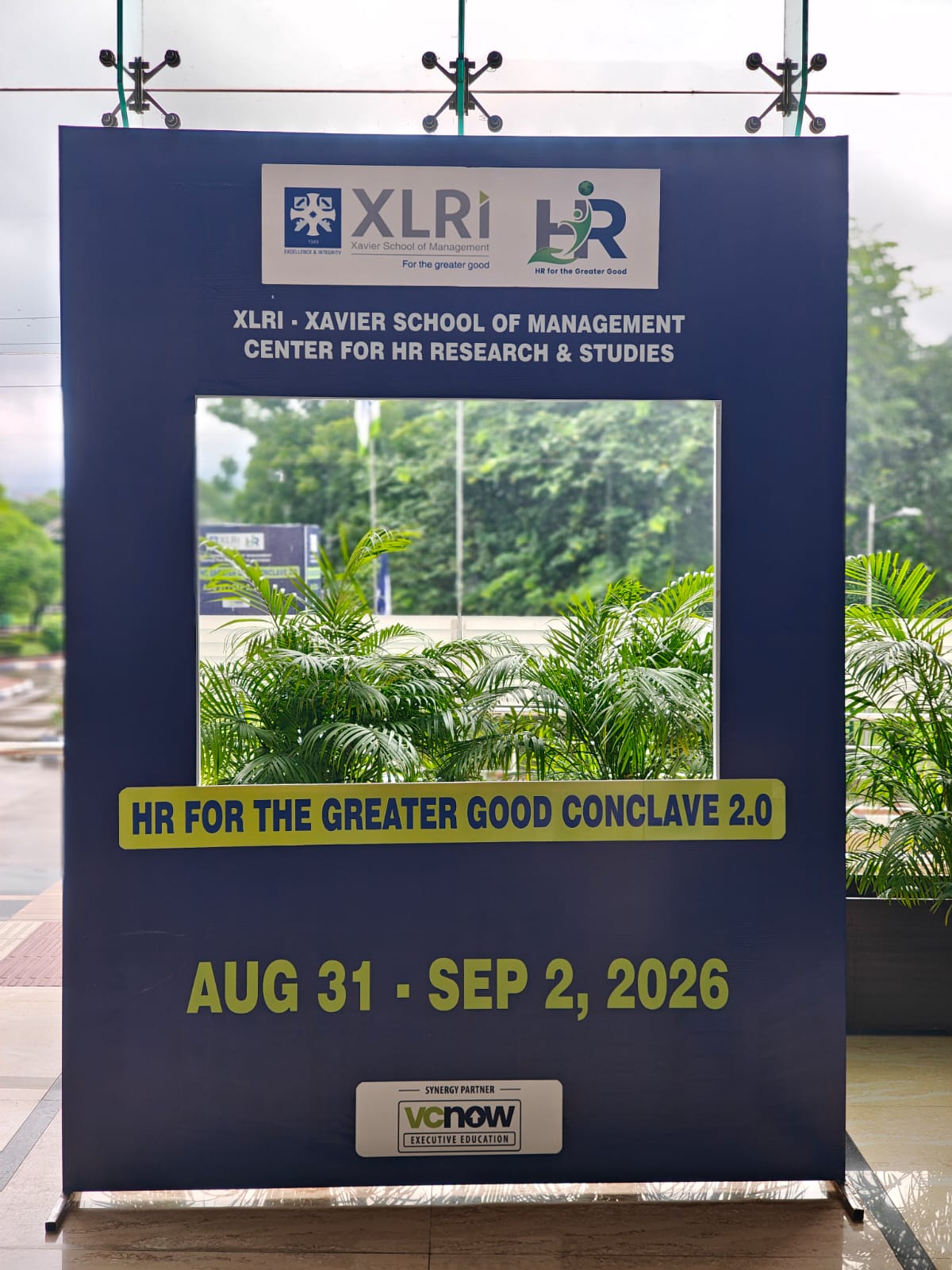
The supplied event signage identifies VCNow Executive Education as the synergy partner. Including that detail is useful for publication context because it signals executive-education support around a programme aimed at working professionals and senior organisational delegates.
Priority Comparison Table: Which Track Fits Your Immediate Need
Plan Ahead for Next Year’s Edition
The 2026 conclave is underway at XLRI Jamshedpur from August 31 to September 2. For organisations planning to attend next year, the current programme offers a useful preview of the format: three days of peer exchange, presentations and structured evaluation around live HR priorities. Follow XLRI’s official page for the next-edition announcement and participation details. Official dates and logistics.
The 2026 fee structure lists Rs. 35,000 plus 18% GST for up to three participants, with an additional Rs. 15,000 plus 18% GST for the fourth and fifth participants. This gives prospective delegates a helpful benchmark while they plan for a future edition; XLRI will confirm any future fees and participation terms.
Bring one well-documented initiative, one measurable outcome, one employee-impact story and one open problem. That format aligns better with the programme’s evaluation style than a generic corporate profile.
If ESG or assurance pressure is rising in your organisation, connect your Green HRM discussion to actual reporting, training and accountability routines rather than treating sustainability as culture messaging alone.
Document where human review sits in your AI-enabled HR process. That is often the first question responsible governance conversations surface.
The official contact details on the site list XLRI, C.H. Area East, Jamshedpur 831001, phone +91 70915 02745 and email [email protected]. For a professional audience, that contact visibility is helpful because it reduces uncertainty around legitimacy and logistics.
Frequently Asked Questions
What is HR for the Greater Good Conclave 2.0?
It is XLRI’s national conclave on responsible human resource management, organised by the Centre for HR Research and Studies for public and private organisations. The official programme frames HR as a driver of ethical, inclusive and sustainable impact. Official source.
When and where is the 2026 conclave taking place?
The official page lists the conclave at XLRI Jamshedpur from August 31 to September 2, 2026. As of September 1, the event is underway. Organisations interested in participating can look ahead to the next edition and monitor the official page for announcements. Official source.
How can my organisation attend next year?
Start by identifying a people initiative that fits the conclave themes and by nominating the HR or L&D leaders who can represent it. XLRI will publish the next-edition participation details on the official programme page; use that page as the source of record for dates, fees and the application process. Official source.
How many delegates can one organisation send?
The site says each organisation may nominate up to three representatives, requires at least one Senior HR Manager or L&D Head, and allows a maximum of five participants per organisation. Official source.
How much does participation cost?
The official fee is Rs. 35,000 plus 18% GST for up to three participants, with Rs. 15,000 plus 18% GST for the fourth and fifth participants. Accommodation and meals are included, while travel is participant-borne. Official source.
Why does this programme matter beyond the event itself?
Because the agenda maps directly to current workforce change. The WEF points to large-scale skills disruption and AI-led business transformation, the ILO warns that AI in HR can create fairness and transparency risks, and Government of India sources confirm a new labour-code operating environment. Those forces make responsible HR execution a live business issue, not a conference theme. WEF, ILO HR AI paper, PIB labour-codes note.
What To Do Next
Interested in attending next year? Use the current programme as a planning guide for your organisation’s AI, labour-code, ESG and reward priorities, then follow XLRI’s official page for next-edition details.