

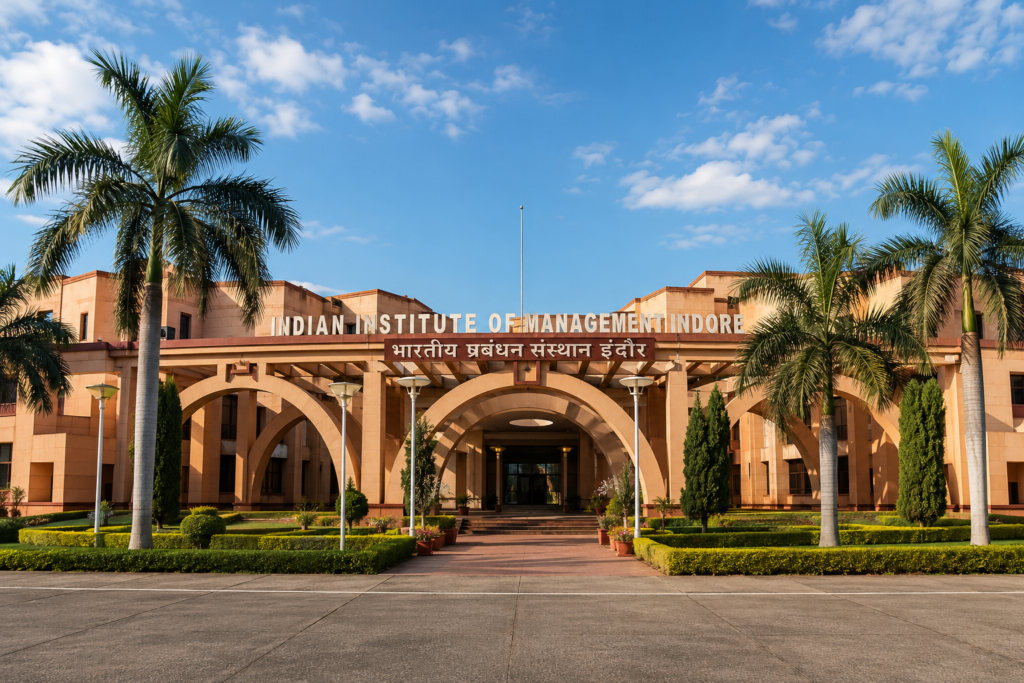
For most of the last two decades, the HR leader’s job was to run a function well: hire efficiently, manage compliance, keep attrition in check, and make sure the annual appraisal cycle didn’t blow up. That job still exists. But it no longer defines who gets to sit in the CHRO’s chair — and it’s not what a CHRO Programme from IIM Indore is built to teach.
In India, that shift is happening faster than almost anywhere else. In 2024, 27% of BSE 100 companies appointed a new CHRO — more than three times the global average of 8%, according to an analysis by Russell Reynolds Associates. Separately, a Josh Bersin Company study covering more than 25,000 CHRO profiles found that 86% say their role is changing “significantly” or “dramatically.” This isn’t a minor recalibration. Companies now expect a different thing from “senior HR” entirely — different knowledge, different decisions, different accountability.
If you’re a senior HR professional weighing whether a CHRO Programme from IIM Indore, or one like it, is worth your time and money right now, that context matters more than any single course catalogue. Before we get to any specific programme, it’s worth understanding what’s actually driving this shift.
How the CHRO Role Is Changing
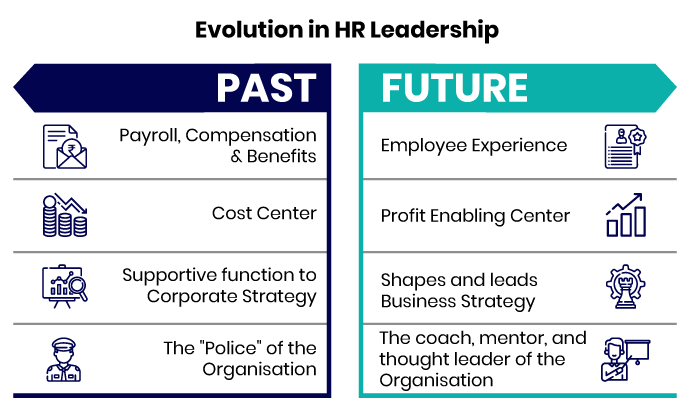
The Turnover Signal
The clearest signal of change isn’t a trend report — it’s turnover data. Fortune 200 companies saw CHRO/CPO turnover climb to roughly 16% in 2025. That implies an average tenure of just over six years, according to the Talent Strategy Group’s CHRO Trends 2026 Report. Close to 40% of those appointments followed a CEO transition. That tells you something important: boards increasingly treat HR leadership change as part of a broader strategic reset, not an isolated HR decision.
The role itself is moving in a genuinely uncomfortable direction, too. Research from DSG Global, covering 300 HR decision-makers, found that 79% believe the CHRO role is expanding in importance. Yet 61% simultaneously feel their boards hold too much power over talent strategy decisions. That tension is worth sitting with. Today’s CHROs aren’t just doing more; boards are asking them to earn a seat at a table that doesn’t always make room for them by default.
What’s Reshaping the Global CHRO Agenda
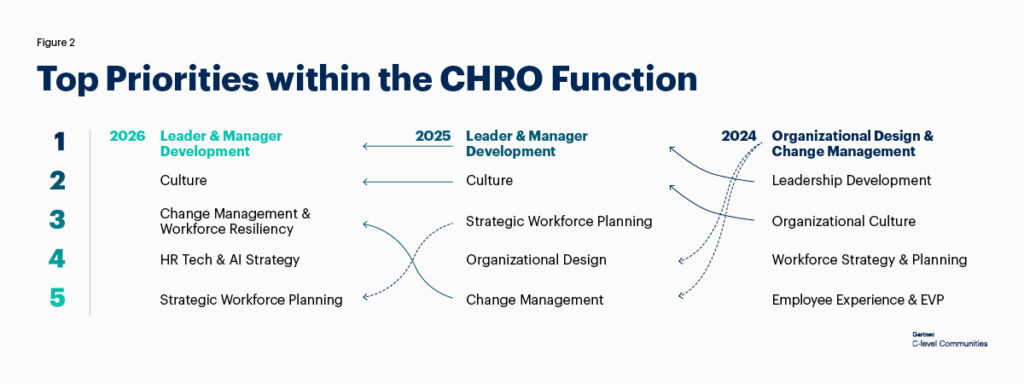
Korn Ferry’s 2025 CHRO Survey, spanning 756 HR leaders across more than 50 countries, adds another layer. Growth and market expansion have risen as a CHRO priority by 25% over just two years. More than a third of CHROs globally now spend most of their time leading transformation efforts rather than managing day-to-day HR operations. Gartner’s 2026 CHRO Priorities research points the same way — AI-driven workforce transformation, redesigning work for a human-machine era, and mobilising leaders through sustained uncertainty now top the CHRO agenda.
None of this is abstract for HR professionals in India specifically. Compensation pressure, cited in Aon’s India Salary Increase Survey, continues to reflect intense competition for skilled talent. Nearly a third of BSE 100 companies changed HR leadership in a single year. Boards are pulling the ready professionals — the ones with strategic vocabulary, financial fluency, and analytical grounding — straight into these roles. The ones who aren’t ready are watching from the sidelines.
What Does a Modern CHRO Actually Do?
It’s worth being precise here, because “strategic HR leader” has become such a common phrase that it’s started to mean very little.
A modern CHRO is not simply a more senior HR Head. The distinction lies in where their attention goes. A traditional HR Head optimises HR processes — recruitment funnels, performance cycles, policy compliance. A CHRO sits in board and CEO conversations instead: mergers and acquisitions, digital transformation, financial performance, enterprise risk. They must translate workforce implications into that language, not the other way around.
Deloitte’s 2025 Global Human Capital Trends survey offers a useful contrast point here. Managers typically spend nearly 40% of their time on immediate operational and administrative tasks. Only about 13% goes toward actually developing the people they lead. A CHRO who operates the same way — reactive, operational, absorbed in the function’s day-to-day — cannot do the job the board actually needs. The CHRO’s value increasingly comes from working above that layer: setting workforce architecture, reading talent risk as a leading indicator of business risk, and building systems that let managers do their jobs better.
What Skills Are Required to Become a CHRO?
If the role has shifted this much, it’s fair to ask what specifically separates a senior HR professional from someone ready to lead at the enterprise level. A few capabilities show up consistently across the research:
- Financial and business fluency — the ability to read P&L statements, understand how workforce decisions show up in financial performance, and speak the language of the CFO and CEO, not just HR
- Data-driven decision-making — and this is a genuine gap, not just a buzzword. Korn Ferry’s research found that only 18% of CHROs believe their organisation consistently uses data analytics to drive people-related decisions. That’s a striking number for a function that talks about “data-driven HR” constantly
- Strategic workforce planning — connecting talent pipelines and succession planning to where the business is actually headed, not where it has been
- Change and culture leadership at scale — Gartner’s 2026 research found that embedding culture into everyday work can lift employee performance by as much as 34%, which is a meaningful business case for treating culture as a strategic lever rather than a soft, secondary concern
- Cross-functional command — enough fluency in M&A, technology adoption, and legal/regulatory frameworks to sit credibly in conversations that were traditionally never HR’s to lead
- AI and digital fluency — not as a technical specialism, but as a governance and workforce-design capability, given how quickly AI adoption is reshaping day-to-day work
Most experienced HR professionals already have some of these. Very few have all of them at the depth a board-level conversation demands — and that gap is precisely what structured executive education is built to close.onals already have some of these. Very few have all of them at the depth a board-level conversation demands — and that gap is precisely what structured executive education is built to close.
Why Functional HR Expertise Alone May Not Be Enough
Here’s the honest tension at the centre of all this: you can be genuinely excellent at HR — deeply skilled in talent management, retention, employee experience, compliance — and still not be ready for a CHRO mandate. That’s not a criticism of functional expertise. It’s a recognition that the CHRO role increasingly demands a different kind of thinking entirely: enterprise-level, financially literate, comfortable with ambiguity and board-level scrutiny.
The gap rarely closes on its own through tenure alone. It closes through deliberate exposure — case-based learning, peer conversations with other senior leaders navigating the same shift, and frameworks that connect HR decisions directly to business outcomes. Executive education programmes exist precisely to fill this space. That’s why more senior HR professionals now turn to structured programmes rather than trying to build this capability entirely on the job.
What Should You Look for in a CHRO Programme?
Not all executive programmes are built with the same rigour, and the difference matters more than most comparison pages let on. A few things worth genuinely scrutinising before you commit:
Curriculum Depth Versus Curriculum Breadth
A long list of module titles is easy to produce. What matters is whether each module goes deep enough to change how you think, not just what you know. Does it include financial statement analysis for HR leaders, or just a passing mention of “business acumen”?
Faculty Credibility and Continuity
Look for programme coordinators with sustained research and industry engagement in organisational behaviour and HR management specifically, not adjunct faculty parachuted in for a single session.
Cohort Quality and Peer Diversity
Executive programmes are as much about who you learn alongside as what you’re taught. A cohort with genuine seniority (10+ years, not a mix of early-career and senior professionals) and industry diversity produces sharper case discussions and a more useful long-term network.
Applied, Not Purely Theoretical, Learning
Case-led discussions and simulations matter. But a capstone project — one that applies the full programme to a real organisational challenge — is a much stronger signal of whether the learning will actually transfer to your job.
On-Campus Immersion, Not Just Live-Online Delivery
Peer learning and faculty access compound in person in ways that don’t fully replicate over video calls, even well-produced ones.
What “Alumni Status” Actually Includes
Many programmes market alumni access loosely. Ask specifically what it includes — network access, learning centre access, ongoing content — and whether it’s automatic or requires a separate application and fee.
Accreditation You Can Verify Independently
Triple accreditation (EQUIS, AACSB, AMBA) is a meaningfully high bar. Very few business schools globally hold all three. It’s worth checking directly rather than taking a brochure’s word for it.
Benchmarking a CHRO Programme from IIM Indore Against This List
If a programme can’t clearly answer these questions, that’s informative in itself. Later in this piece, we’ll run the CHRO Programme from IIM Indore against exactly this checklist.
Who Should Consider a CHRO Programme?
Based on how these prograBased on how these programmes are typically structured, they tend to make the most sense for:
- Senior HR professionals with 10+ years of experience who are actively being considered for, or aspiring toward, CHRO-level roles
- Current HR Heads, VP/AVP HR, or equivalent leaders looking to formalise and expand their strategic influence
- HR Business Partners operating at senior levels who want to move from a functional/operational mandate to an enterprise one
- Professionals who already have demonstrated leadership in talent, culture, or transformation work, but recognise a gap in financial, analytical, or board-level fluency
If you’re earlier in your HR career, this kind of programme is likely premature — the value compounds when you already have enough lived experience to test the frameworks against real decisions you’ve made.
Why Choose a CHRO Programme from IIM Indore?
This is where a specific option is worth naming directly. The CHRO Programme from IIM Indore is a reasonably representative example of what a rigorous version of this kind of programme looks like in India today.
Programme Structure and Format
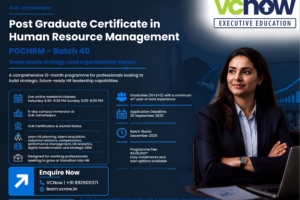
IIM Indore’s Post Graduate Certificate Programme for Emerging Chief Human Resource Officers (Batch 02) runs for 12 months, combining live online sessions (Sunday, 9:00 AM–1:15 PM) with a 6-day on-campus immersion at IIM Indore’s campus. Prof. Ranjeet Nambudiri and Prof. Swati Ghulyani, both faculty in Organizational Behavior and Human Resource Management at the institute, coordinate the programme.
What Stands Out
A few things are worth noting specifically:
- Eligibility is deliberately senior-skewed — minimum 10 years of relevant work experience and at least 50% marks in UG/PG, which keeps the cohort at a genuinely peer level rather than mixed-seniority
- The institute itself holds Triple Crown accreditation (EQUIS, AACSB, AMBA) and is ranked among the top 100 global business schools for executive education by the Financial Times — a relatively rare combination globally, not just in India
- Past participants average 18 years of work experience, drawn from a genuinely diverse set of industries — technology (IBM, NTT Data, Hikvision), financial services (SBI Cards), manufacturing (TVS Group, Hindware), professional services (Concentrix), and more, with representation from metros, tier-2 cities, and international locations
- The programme includes a Capstone Project applying integrated learning to a live organisational challenge, evaluated alongside quizzes, case study presentations, business simulations, and examinations
- Participants who complete the programme successfully receive a Post Graduate Certificate from IIM Indore and become eligible to apply separately for IIM Indore’s Executive Education Alumni status (a lifetime membership involving a separate fee and application process, not an automatic inclusion)
Verified Fact Versus Marketing Framing
It’s worth being precise here. The official programme brochure documents the curriculum breadth — 11 modules spanning strategic HR leadership, agile teams, workforce planning, DEI, financial statements for HR leaders, and AI in HR systems. It does not document claims about specific career outcomes or promotion guarantees — and any programme, including this one, that implies guaranteed career acceleration deserves some scepticism. IIM Indore itself describes admission as competitive and profile-based, not automatic on meeting minimum eligibility.
What to Expect from the CHRO Programme from IIM Indore?
Structurally, the 11 modules move in three stages. First, personal and team leadership — strategic leadership identity, building agile HR teams. Second, core strategic HR management — workforce planning, compensation architecture, executive comp and board governance. Third, the specific capabilities most CHRO-track professionals are weakest in: financial statement literacy for HR leaders, HR’s role across M&A, and end-to-end HR digital and AI architecture. The curriculum dedicates full modules to DEI strategy, employee experience and well-being, and HR analytics, rather than treating them as side mentions — which tracks with where the research above suggests real capability gaps exist.
The capstone project is arguably the most meaningful structural element. It makes participants test the frameworks from all eleven modules against a genuine organisational problem from their own workplace, rather than a generic case study.
Evaluating the CHRO Programme from IIM Indore for Your Career
Run the CHRO Programme from IIM Indore against the framework from earlier in this piece. Does the curriculum go deep rather than just wide? Yes — modules like “Understanding Financial Statements as HR Leaders” and “Leveraging AI and Technology for HR Systems” go beyond surface-level mentions. Is the cohort genuinely senior and diverse? The eligibility bar and documented alumni profile suggest yes. Is there applied learning, not just theory? The capstone project and case-led pedagogy suggest yes. Is the accreditation independently verifiable? Yes — EQUIS, AACSB, and AMBA are all checkable directly through those accrediting bodies’ own sites.
Where you’ll want to do your own diligence: talk to the programme coordinators directly about the current cohort profile for Batch 02 specifically, understand exactly what “alumni status” will cost and include if you plan to pursue it, and be clear-eyed that a certificate — however rigorous the programme behind it — is a capability accelerant, not a guarantee of a CHRO title. The professionals most likely to benefit are the ones who go in already partway toward the role, using the programme to close specific, identifiable gaps rather than as a substitute for experience they haven’t yet built.
Conclusion
The pressure on today’s senior HR professionals isn’t really about doing HR better. It’s about becoming fluent in a different language entirely — financial, strategic, enterprise-wide — while still holding on to what made them good at HR in the first place. That’s a genuinely hard transition to make alone. It’s harder still without structured exposure to frameworks, peers, and faculty who’ve thought carefully about exactly this gap.
If you’re already carrying 10+ years of HR leadership and can feel that gap in real board or leadership conversations, a rigorously built programme is one of the more direct ways to close it — one that goes deep rather than wide, forces applied learning, and surrounds you with a genuinely senior peer cohort. The CHRO Programme from IIM Indore is a serious example of what that can look like. Whether it’s the right one for you specifically comes down to the questions above, not the brochure.
Frequently Asked Questions
- What does a CHRO do that a traditional HR Head doesn’t? A CHRO operates at the enterprise strategy level — involved in board conversations, M&A, financial performance, and digital transformation — rather than primarily managing HR operations and processes.
- What skills are required to become a CHRO? Financial and business fluency, data-driven decision-making, strategic workforce planning, change and culture leadership, cross-functional business acumen, and increasingly, AI and digital governance fluency.
- How can an experienced HR professional prepare for a CHRO role? Through a combination of deliberate exposure to enterprise-level business functions, mentorship, and structured executive education that closes specific capability gaps — particularly around financial literacy and strategic decision-making.
- Is an executive programme necessary to become a CHRO? Not strictly necessary, but it accelerates the specific capabilities — financial fluency, structured frameworks, peer exposure — that are otherwise slow to build purely through on-the-job experience.
- Who should consider a CHRO programme like IIM Indore’s? Senior HR professionals with 10+ years of experience — HR Heads, VP/AVP HR, senior HRBPs — who are actively working toward or being considered for enterprise-level HR leadership roles.
- What makes the CHRO Programme from IIM Indore different from other options? Its Triple Crown accreditation (EQUIS, AACSB, AMBA), a senior and industry-diverse cohort (18 years’ average experience), an applied capstone project, and a curriculum that dedicates full modules to financial literacy and AI/digital architecture for HR leaders.
- Does the programme guarantee a CHRO role after completion? No credible executive programme can guarantee this, and IIM Indore’s materials do not claim to. It builds capability and credentials; career outcomes depend on the individual’s experience, opportunities, and organisational context.
- What is the format and duration of the IIM Indore CHRO programme? 12 months, with live online sessions every Sunday (9:00 AM–1:15 PM) and a 6-day on-campus immersion at the IIM Indore campus.
- What is the eligibility criteria? Minimum 10 years of relevant work experience and at least 50% marks in undergraduate or postgraduate studies from any discipline. Admission is competitive and based on profile evaluation.
- What credential do participants receive on completion? A Post Graduate Certificate Programme for Emerging CHROs, awarded by IIM Indore, along with eligibility (via separate application and fee) for IIM Indore’s Executive Education Alumni status.
View More: IIM Indore’s Advanced Programme in Corporate Strategy & Business Leadership , IIM Indore’s Post Graduate Certificate Programme in Family Business Management & Entrepreneurship , Family Business Management Courses